Bikeways Map
 Explore the 7th Edition of the Miami Valley Ohio Bikeways Map

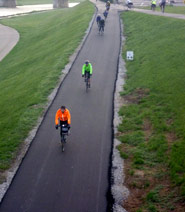
Active transportation is any kind of human-powered mode, such as biking and walking. It also includes accessing and using public transit and also mobility assisted by devices such as wheelchairs or scooters. Active transportation is not only for getting in shape and staying healthy – though walking and biking are excellent exercise and can be a fun way to introduce physical activity into your daily life. But keep in mind: your feet are an efficient and fun way to get around town. You’ll be reducing vehicle congestion and noise, and not to mention air pollution and climate pollution emissions.
MVRPC has several ongoing efforts to encourage and accommodate Miami Valley residents who use active transportation, including producing a map of the Nation’s Largest Paved Trail Network. MVRPC's RIDESHARE Program is a partner of Gohio Commute, a FREE service with information on bike commute options for the Region. This program allows you to map your route, find others to join your bike commute, and track your CO2 emissions and money saved for each bike trip you take instead of a single-occupancy vehicle. Visit MiamiValleyRideshare.org to register for this FREE program.
 ys Map for the Miami Valley
 The 7th Edition of the Miami Valley Ohio Bikeways Map is now available. View the options for receiving a bike map either at a pick-up location or by mail.
Electric bicycles are legal bicycles in Ohio. These vehicles operate like ordinary bicycles, but include a battery and small motors that provide assistance for longer rides or just for going uphill. These bikes are the fastest growing segment of the bicycle retail market (source: Upway Trend Report 2025). Class 1 and Class 2 E-bikes, as defined in the Ohio Revised Code, are allowed on the entire Miami Valley Trails network.
Ohio law defines three classes of legal e-bikes:
Recently, devices that exceed these legal limits have appeared on the market. These devices, often available online, can have motors with power ratings of 2500W or more, and can reach speeds exceeding 45 miles per hour. Regardless of how they are marketed, devices that exceed the legal limits of e-bikes are not legal e-bikes in Ohio. Frequently, you may hear these devices referred to as e-Motos, or electric motorcycles. For more detail, download a slide presentation on the differences between legal e-bikes and e-motos.
In cooperation with trail managing agencies across the Miami Valley and with the help of many dedicated volunteers, MVRPC completed regional trail user surveys in 2009, 2013, 2017, 2021 and most recently in 2025-26. This information is collected as part of the objectives outlined in the Miami Valley Bike Plan Update 2015.
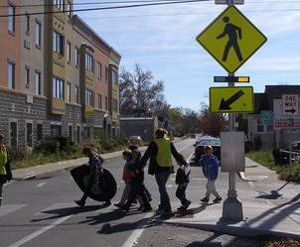
MVRPC works with Ohio DOT (ODOT), the Safe Routes National Partnership, and many local jurisdictions to create alternative transportation options around schools. Allowing kids to bike or walk to school increases their focus and concentration at school, and helps set lifetime patterns that reduce obesity and other negative health impacts. School Travel Plans collect programs and project to make walking and biking to school safer and more convenient. The Ohio Department of Transportation has funding and extensive data resources to help local governments develop School Travel Plans.
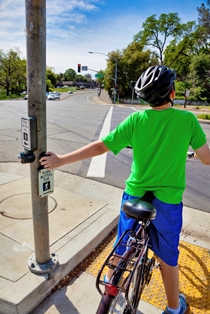
MVRPC works with member jurisdictions to enhance the environment for walking as well. Please see our Walkable Communities page for information on our projects and publications.
MVRPC's continuous safety analysis program routinely reviews crash data for accidents involving bicyclists and pedestrians. Get more information on the Transportation Safety webpage.
The “Mayors' Challenge for Safer People and Safer Streets” invites mayors and local elected officials to take significant action to improve safety for bicycle riders and pedestrians of all ages and abilities over the next year. The Challenge will showcase best local practices to improve safety, share tools for local leaders to take action, and promote partnerships to advance pedestrian and bicycle safety. MVRPC supports and promotes this national Department of Transportation effort.
Explore the 7th Edition of the Miami Valley Ohio Bikeways Map

MVRPC offers several programs and services which benefit residents, businesses and members alike. Please select the topic in which you’re interested to learn more about how MVRPC can assist you.